1273 Kirk Road
Garnet Valley, PA 19060




Helping Pets Cope with Noise Aversion: Fireworks & Thunderstorms
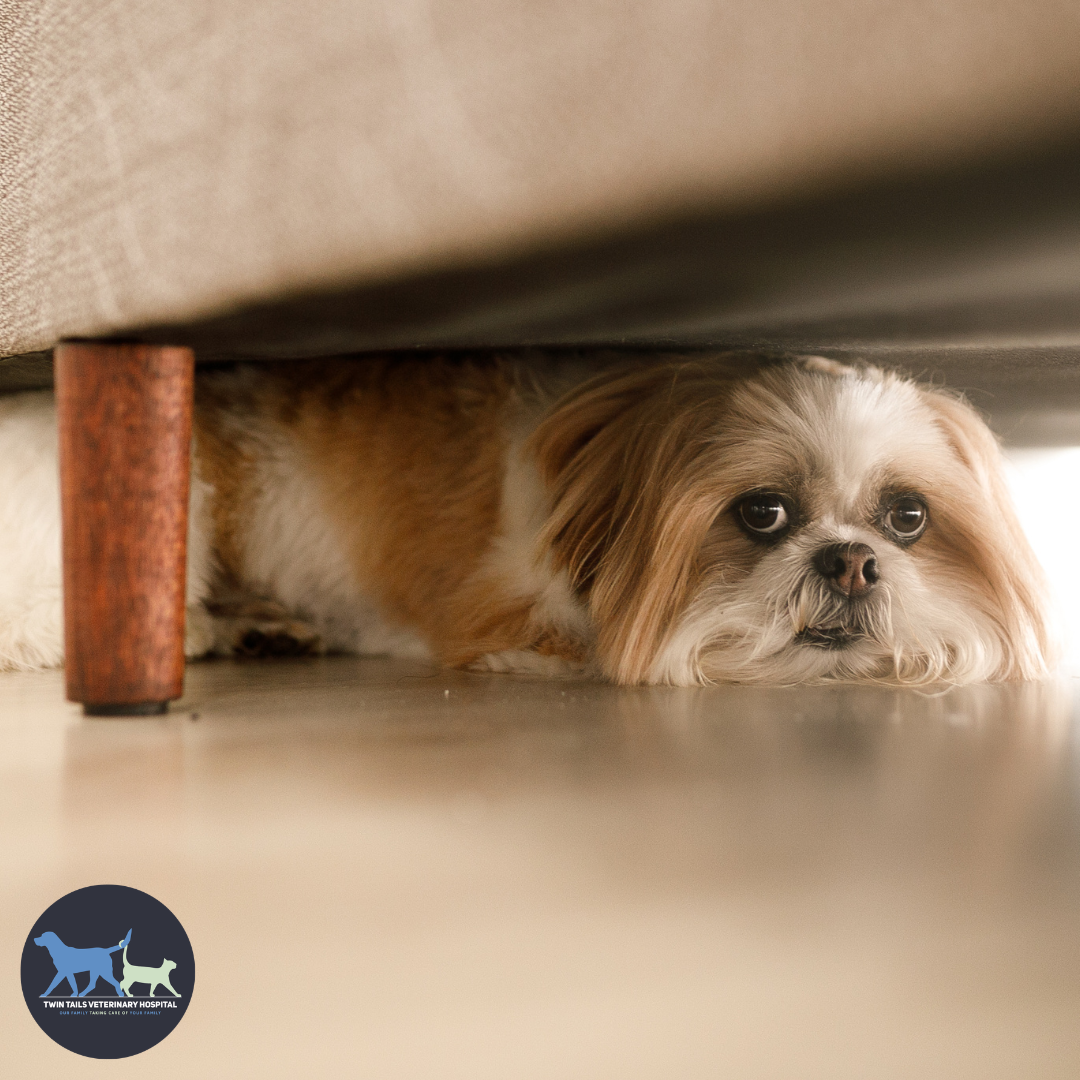
Loud, sudden sounds like fireworks and thunderstorms can be extremely distressing for many pets. At Twin Tails Veterinary Hospital, we frequently see dogs and cats struggling with what’s known as noise aversion, a fear or anxiety response triggered by loud or unpredictable noises.
For some pets, this may appear as mild restlessness. For others, it can escalate into intense panic. Without support and proactive management, these reactions often become more severe over time.
Why Fireworks and Storms Are So Overwhelming for Pets
From a pet’s perspective, fireworks and thunderstorms combine several frightening elements all at once:
Sudden, unpredictable loud noises
Bright, flashing lights (fireworks or lightning)
Changes in air pressure before and during storms
A lack of control or ability to escape the situation
Unlike humans, pets don’t understand the source or meaning of these sounds. To them, the experience can feel threatening and confusing, which activates a natural fear response.
Common signs of noise-related anxiety include:
● Hiding or trying to “escape”
● Trembling or shaking
● Pacing or restlessness
● Excessive barking or vocalization
● Destructive behavior (chewing, scratching doors, etc.)
● Drooling or panting
● Accidents in the house
● Refusal to eat or settle
Fireworks: A Major Trigger for Escape-Related Injuries
Fireworks, especially during holidays like the Fourth of July, are one of the most common causes of panic-related escapes in pets. When frightened, animals may act instinctively to get away from the sound, which can lead to dangerous situations.
Even well-trained pets can:
Slip out of collars or harnesses
Bolt through open doors
Jump fences or dig under barriers
Become disoriented and run far from home
Because of this risk, preparation ahead of time is one of the most important ways to protect your pet’s safety.
How to Help Your Pet Feel Safe and Supported
While we can’t stop fireworks or storms from happening, there are many ways to reduce their impact on your pet.
Create a Safe, Predictable Space
Keep pets indoors during storms or known fireworks events
Close blinds and curtains to block flashes of light
Set up a quiet “safe room” where your pet already feels comfortable
Add familiar bedding, toys, or items that smell like home
Reduce Noise Exposure
Turn on white noise machines, fans, or calming music
Use the television at a moderate volume to help mask sudden sounds
Keep household activity calm and consistent
Provide Reassurance Without Reinforcing Fear
Stay calm, pets often mirror human energy
Offer gentle comfort if your pet seeks it
Provide enrichment like chew toys or treats for distraction
Avoid overly anxious behavior, which can increase their stress
Practice Safe Outdoor Handling
If you must take your dog outside:
Always use a leash, even in fenced areas
Check that collars and harnesses are properly fitted
Consider a double-leash system for added security
Double-check gates, doors, and fences before storms or fireworks begin
Make Sure Identification Is Up to Date
Ensure your pet wears current ID tags with your contact information
Verify microchip registration details are accurate and active
This greatly increases the chance of reunification if a pet becomes lost
When to Contact Twin Tails Veterinary Hospital
If your pet shows signs of severe anxiety during loud events, it may be time to seek veterinary guidance. This includes:
Intense or prolonged trembling
Attempts to escape or injure themselves
Destructive or panicked behavior
Inability to settle even after the noise has stopped
Changes in appetite or elimination habits during storms/fireworks
Early intervention can make a significant difference in long-term anxiety management.
Veterinary Support for Noise Aversion
At Twin Tails Veterinary Hospital, we can help assess your pet’s symptoms and develop a personalized plan to reduce fear and stress during predictable events like thunderstorms or fireworks.
Depending on your pet’s needs, recommendations may include:
Behavior modification strategies
Environmental management techniques
Calming supplements or prescription medications when appropriate
If additional support is needed, we may also recommend referral options for advanced behavioral care.
We’re Here to Help
Noise aversion can be stressful for both pets and their families, but with the right plan in place, many pets can learn to feel safer and more secure during loud events.
If your pet struggles with noise sensitivity, we encourage you to reach out before the next storm season or holiday. Proactive planning is one of the most effective ways to protect your pet’s comfort, safety, and well-being year-round.
Quick Links
Keep
In Touch

Office hours
- Monday 8:00 AM - 8:00 PM
- Tuesday 8:00 AM - 8:00 PM
- Wednesday 8:00 AM - 6:00 PM
- Thursday 8:00 AM - 8:00 PM
- Friday 8:00 AM - 5:00 PM
- Saturday 8:00 AM - 1:00 PM
- Sunday Closed
Get in touch
© 2026 Twin Tails Veterinary Hospital. All rights Reserved - Accessibility Statement - Privacy Policy - Sitemap
Powered by